Exploring uncertainty in flood risk estimates using low-complexity modelling
Luca Brusasco’s PhD research explores how we can understand what drives flood risk uncertainty across catchments without repeatedly running expensive hydrodynamic models


Luca Brusasco’s PhD research explores how we can understand what drives flood risk uncertainty across catchments without repeatedly running expensive hydrodynamic models

New paper published in Applied Ocean Research explores the deep learning models that predict how our coastlines will change, and how certain we can be about those predictions.

Research published in NHESS has found that artificial intelligence can be used to help improve fluvial flood risk assessment.
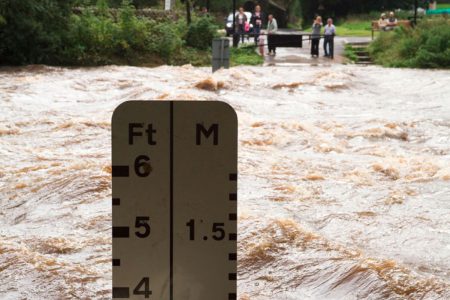
This page hosts a database listing flash flood events in the UK derived from historical reports dating back over more than 200 years.
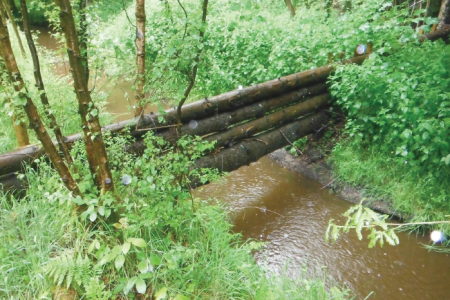
This tool provides a quick and accessible analysis that can support modelling of leaky barriers across different levels of detail, from simple site assessment through to intermediate or detailed models
In this podcast, Professor Rob Lamb explores how digital technologies can support flood risk management
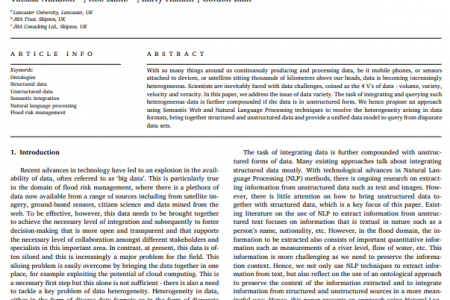
This paper explores how flood risk management can utilise the exponential increase in ‘big’data’ generated by a range of sources including satellites, mobile phones, ground-based sensors and citizen science. It proposes approaches to collate, integrate and query data from unstructured and disparate data sources.
This network model highlights the need for robust design of nature-based flood risk measures and allows rapid assessment of the whole-system performance of leaky barriers in real stream networks.
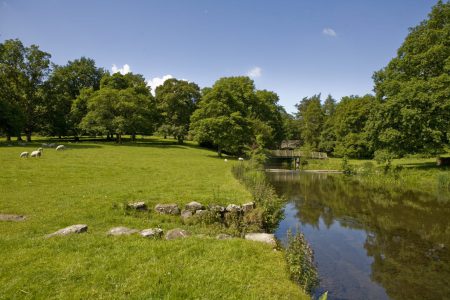
Analysis of local authority areas where different types of tree planting (floodplain, riparian, wider catchment) could help reduce flood risk
This report aims to help identify the data and modelling needs, and the robustness of evidence, for developing Natural Flood Management strategies in the Skell catchment to reduce flood and sediment risks.