Exploring uncertainty in flood risk estimates using low-complexity modelling
Luca Brusasco’s PhD research explores how we can understand what drives flood risk uncertainty across catchments without repeatedly running expensive hydrodynamic models


Luca Brusasco’s PhD research explores how we can understand what drives flood risk uncertainty across catchments without repeatedly running expensive hydrodynamic models

New paper published in Applied Ocean Research explores the deep learning models that predict how our coastlines will change, and how certain we can be about those predictions.

Research published in NHESS has found that artificial intelligence can be used to help improve fluvial flood risk assessment.

Olutayo Ekundayo’s PhD research finds strong community engagement helps people work together, build trust and take action, making communities more resilient to flooding.

Research into improving how uncertainty is understood and managed in complex flood risk models provides new insights into which uncertainties matter most, and practical approaches to analysis.

Ben Bluck’s PhD research sheds light on how river culverts act as behavioural barriers to fish passage

Tharindu Manamperi shares his latest research to help predict shoreline change using deep learning methods

Interactive map of places mentioned in research studies, published between 2017 and 2023, about working with natural processes to reduce the risk of flooding.
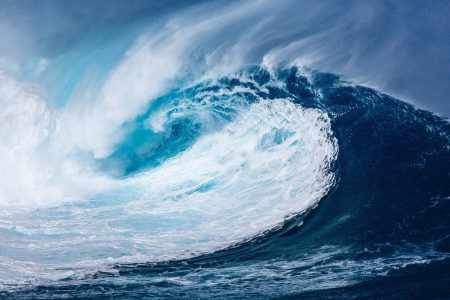
Published research by Jake Grainger explores statistical techniques that better utilise ocean buoy data to help characterise the ocean wavefield.

Luke Jenkins publishes research in ‘Natural Hazards’ that provides evidence for the prevalence of consecutive storms, big waves or high tide events occurring over a short period of time (known as clustering) around the UK.