Using a natural capital approach to assess the impact of rewilding on the provision of ecosystem services
MSc project poster – Luke Hussey assessed the impact of rewilding the Broughton Hall Estate using a natural capital approach.

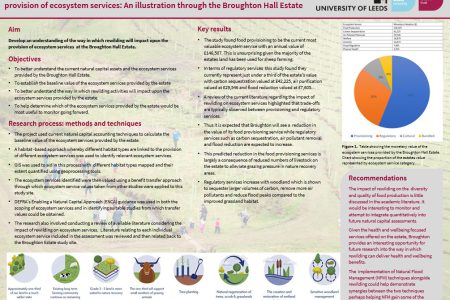
MSc project poster – Luke Hussey assessed the impact of rewilding the Broughton Hall Estate using a natural capital approach.

A team project with the Fluid Dynamics CDT explores how flood management processes can be captured on a scale model

Understanding the characteristics of wind-generated waves is important for modelling structural responses in ocean engineering. This paper explores statistical techniques to improve the understanding of estimated parameters of wind-generated waves and help oceanographers gain insights into their behaviour.
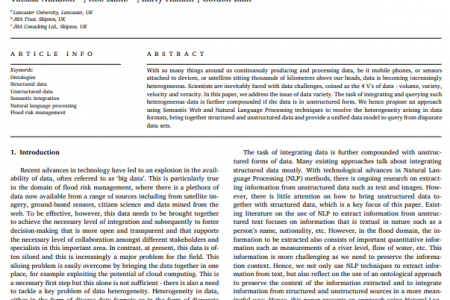
This paper explores how flood risk management can utilise the exponential increase in ‘big’data’ generated by a range of sources including satellites, mobile phones, ground-based sensors and citizen science. It proposes approaches to collate, integrate and query data from unstructured and disparate data sources.
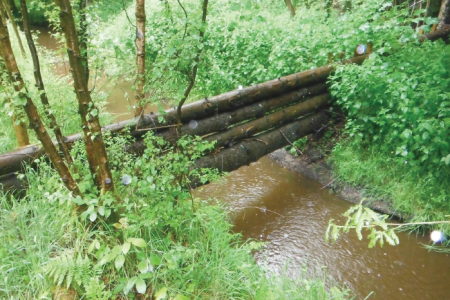
This network model highlights the need for robust design of nature-based flood risk measures and allows rapid assessment of the whole-system performance of leaky barriers in real stream networks.

This study developed and trialled new surface water flood (SWF) forecast products in a flood incident workshop and makes recommendations for the application of future forecast information and processes.

Analysis of local authority areas where different types of tree planting (floodplain, riparian, wider catchment) could help reduce flood risk
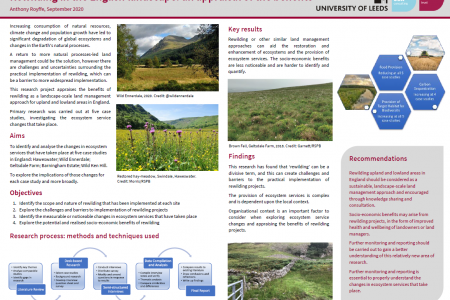
MSc project poster – Anthony Royffe appraised the benefits of rewilding as a landscape-scale land management approach for upland and lowland areas of England.
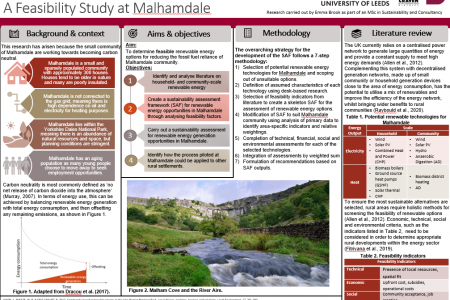
MSc project poster – Emma Brook investigated the feasibility of community scale renewable energy for the Malhamdale community in North Yorkshire.
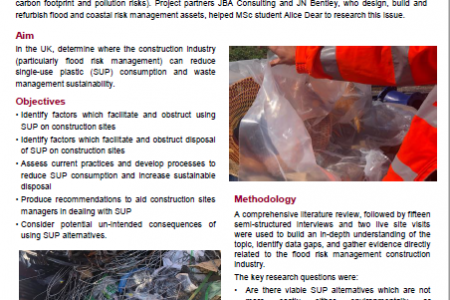
MSc project poster – Alice Dear investigated where the construction industry (particularly flood risk management) can reduce single-use plastic (SUP) consumption and improve waste management sustainability