Primary Big Bang Science Day 2026
Primary school pupils explore the water environment in a day of exciting interactive STEM activities.
Organised and hosted by Settle College, this event aims to inspire a lifelong interest in science and STEM subjects. It’s part of the ongoing collaboration and knowledge exchange between primary and secondary science leads to help each other improve science provision in schools.
This year, we teamed up again with the North Yorkshire Fire and Rescue Service to deliver 20 interactive sessions to over 100 pupils with the wave tank and water safety flume models.
Alex Scott and Belinda Geldard from JBA Trust used the wave tank and coastal learning resources to explore coastal flood risk and how engineering and nature-based solutions can help reduce flooding and erosion.
Public Safety Officers from NYF&RS led sessions about water safety in rivers, demonstrating how river structures like weirs and culverts affect the flow of water in a river and create hidden dangers.
As part of Drowning Prevention Week we also shared key messages about water safety in river and at the coast, including staying safe, what to do in an emergency and ‘float to live’.
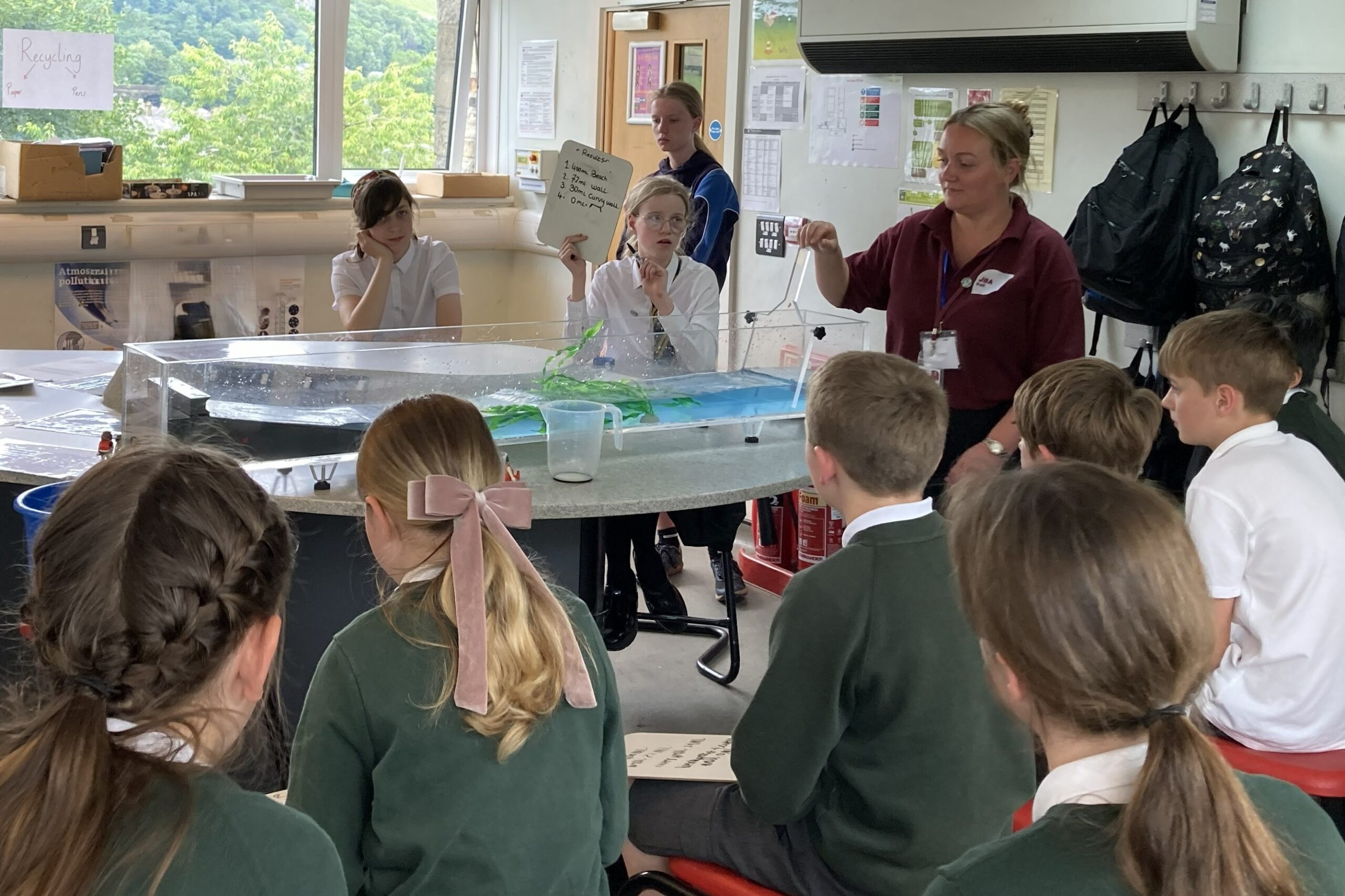
Image: Belinda Geldard makes waves as Year 5 predict how effective the combination of an engineered recurve wall and nature-based solution (kelp) will be at reducing over-topping and flood risk.
Belinda Geldard, Civil Engineer at JBA said, “I really enjoyed sharing my passion for engineering with the students, and see how involved they were in the experiments and activities. They asked lots of questions and made some excellent predictions about how different structures could change coastal flood risk”.
Rachel Horton, Science Teacher at Settle College said, “Primary Science Day is a fantastic way to spark an interest in science and engineering that will stay with pupils and shape their choices throughout school. This year’s event was another huge success and gave pupils a unique insight into how STEM is used in the real world.”
Find out more about our learning resources and physical models.