Maths and hydrology workshop supports flood resilience
Knowledge Exchange Catalyst workshop brings together mathematical and flood modelling communities to improve flood hydrology
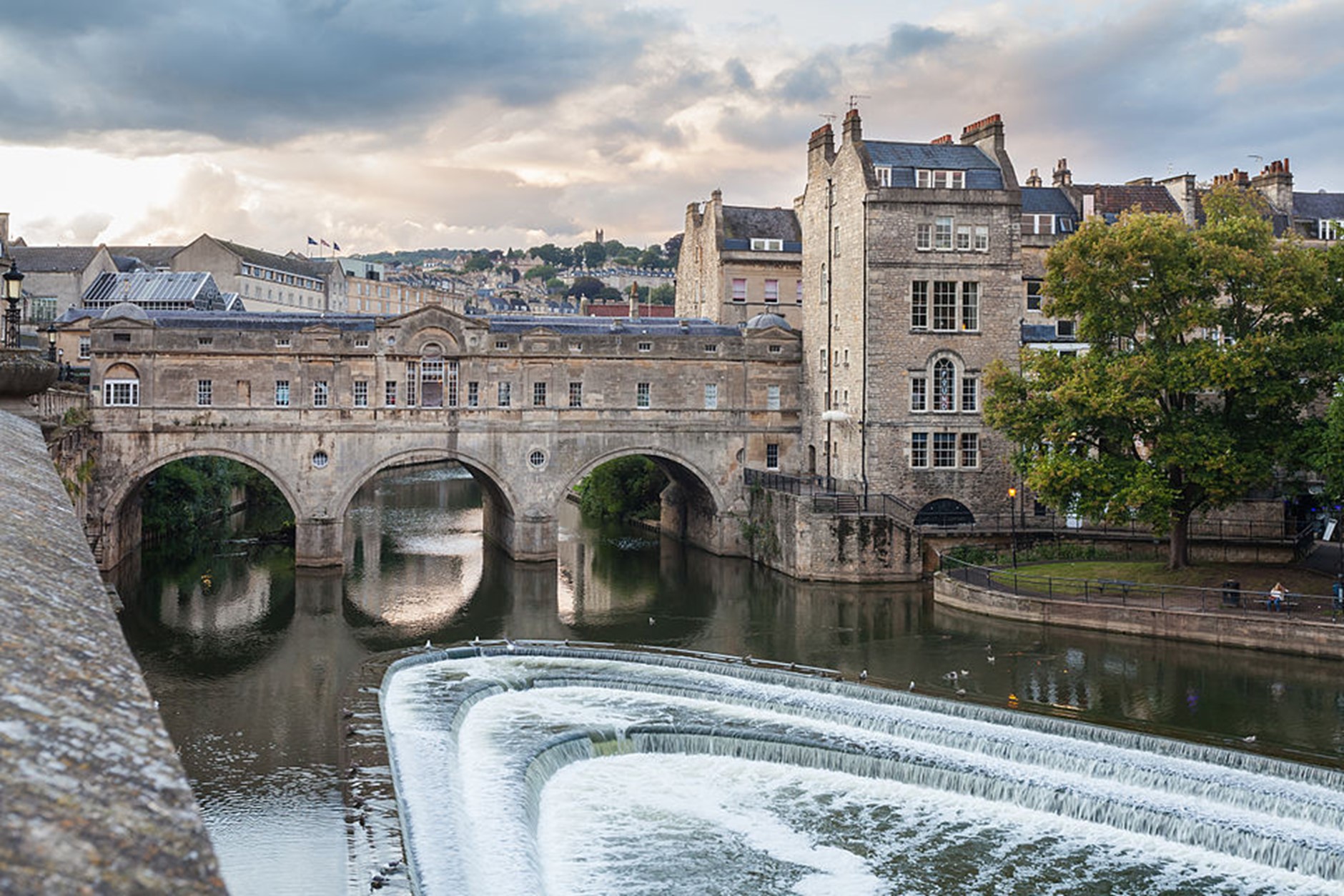
On the 3 and 4 December, we joined up with Dr Phil Trinh from the University of Bath to welcome a unique gathering of mathematicians and flood risk modellers at the Guildhall, Bath, to explore how mathematics provides insights into hydrological modelling.
There are a wide range of hydrological models in the literature, with many sharing common physical and conceptual structures. The workshop enabled the group to share ideas and explore how theoretical analysis can provide insights about the behaviour, calibration and robustness of rainfall-runoff models.
The group explored the role of physics in the age of AI, intercomparisons of models and the benchmarking of new hydrological methods, and the ways in which models represent the influences of climate change on flood risk. Throughout the open and energetic discussions, a recurring theme was that mathematical analysis is as important now as ever in a world of multiple models, readily available software and data, and of machine learning. Outputs of these discussions will help the research and practice communities, in mathematical sciences and hydrology, to understand the role of mathematical analysis to support decision making in flood risk applications.
At the end of the workshop, the participants agreed on the importance of continuing to build collaborative relationships between mathematics and hydrologists, using further workshop activity in 2026 to tackle the specific inter-disciplinary questions that we gathered and refined throughout the event.
Together with the other participants, we plan to publish two joint news bulletins articulating some of the key scientific issues that lie at the heart of the mathematical-hydrology theme: one bulletin will be oriented towards the hydrological community, the other for mathematical audiences. Several informal partnerships have already emerged following the workshop, and we look forwards to the injection of new ideas and approaches in 2026.
The workshop was convened as part of a University of Bath and JBA Trust collaboration project which aims to explore how ideas from mathematics can be applied to hydrological modelling and benchmarking. The project is funded by a Knowledge Exchange Catalyst programme at the International Centre for Mathematical Sciences.
Thank you to all who joined us in Bath. We were delighted to host such a great group of researchers and practitioners, with leading experts from Newcastle University, University of Leeds, University of Bath, University of Bristol, , University of Manchester, Durham University, University of Warwick, UK Centre for Ecology & Hydrology, Environment Agency and JBA Consulting.