How certain are we about deep learning-based shoreline change predictions?
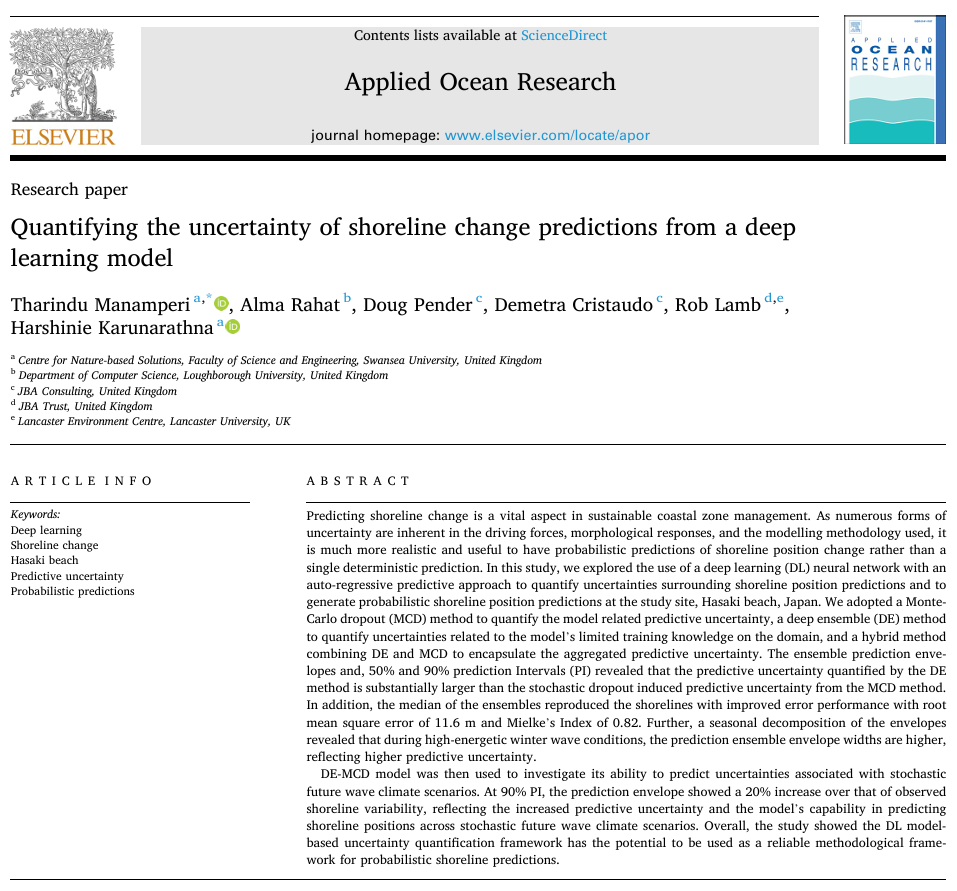
Tharindu Manamperi, a PhD researcher at Swansea University, has published a paper on the deep learning models that predict how our coastlines will change, and how certain we can be about those predictions.
Improving our understanding of uncertainty and how it is represented and communicated will help improve decision making for coastal risk assessment and management.
The paper ‘Quantifying the uncertainty of shoreline change predictions from a deep learning model‘ is published in Applied Ocean Research, an international journal for ocean and coastal engineering research.
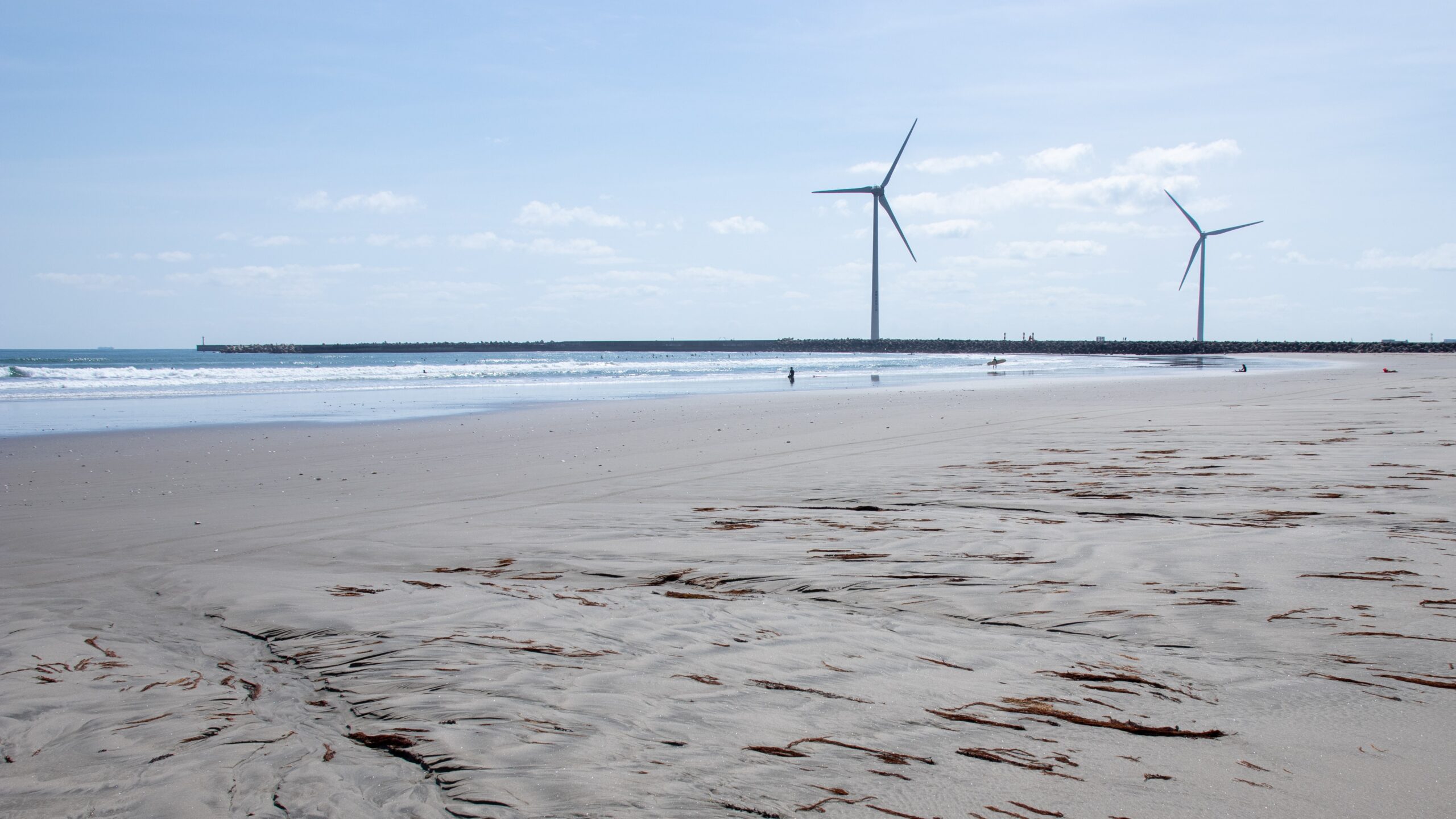
Tharindu’s research developed an uncertainty quantification framework, applying and evaluating it at a study site at Hasaki Beach, Japan to utilise the high frequency surveyed beach profile data collected across multiple decades.
By exploring probabilistic shoreline predictions, Tharindu was able to investigate how different sources of predictive uncertainty can be identified, quantified, and meaningfully represented. This framework has the potential to support risk-based coastal management and adaptation planning.
We’re pleased to be able to support Tharindu’s PhD research through our doctoral research and training programme.
Citation
Tharindu Manamperi, Alma Rahat, Doug Pender, Demetra Cristaudo, Rob Lamb, Harshinie Karunarathna, Quantifying the uncertainty of shoreline change predictions from a deep learning model, Applied Ocean Research, Volume 176, 2026, 105275, ISSN 0141-1187. Available at: https://doi.org/10.1016/j.apor.2026.105275.
Funding and support
Tharindu’s research is supported by the UK & Engineering and Physical Sciences Research Council (EPSRC) – Doctoral Training Partnerships (DTP) (EP/W524694/1) and JBA Trust (project No. W22-1128),
Tharindu is supervised by Professor Harshinie Karunarathna (Swansea University) and Dr Alma Rahat (Loughborough University), and Dr Doug Pender and Dr Demetra Cristaudo (JBA Consulting)