Research shows how inclusive community engagement supports flood resilience
Olutayo Ekundayo’s PhD research finds strong community engagement helps people work together, build trust and take action, making communities more resilient to flooding.


Olutayo Ekundayo’s PhD research finds strong community engagement helps people work together, build trust and take action, making communities more resilient to flooding.

Research into improving how uncertainty is understood and managed in complex flood risk models provides new insights into which uncertainties matter most, and practical approaches to analysis.

Ben Bluck’s PhD research sheds light on how river culverts act as behavioural barriers to fish passage

Tharindu Manamperi shares his latest research to help predict shoreline change using deep learning methods
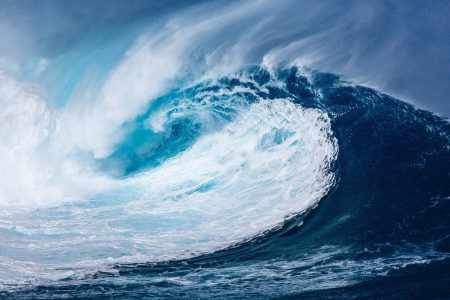
Published research by Jake Grainger explores statistical techniques that better utilise ocean buoy data to help characterise the ocean wavefield.

Luke Jenkins publishes research in ‘Natural Hazards’ that provides evidence for the prevalence of consecutive storms, big waves or high tide events occurring over a short period of time (known as clustering) around the UK.

Freya Muir publishes her research in ‘Earth Surface Processes and Landforms’ as well as an open-source tool for mapping coastal change, known as VedgeSat.
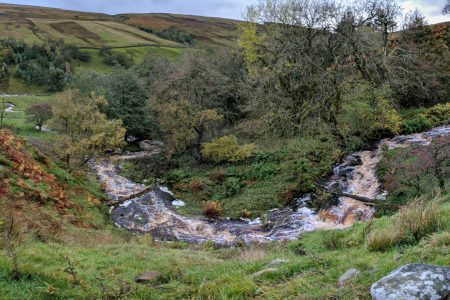
Two papers published in the Journal of Hydrology explore how to quantify the impacts of natural flood management (NFM), specifically leaky dams in upland catchments, on the downstream flood peak magnitude.
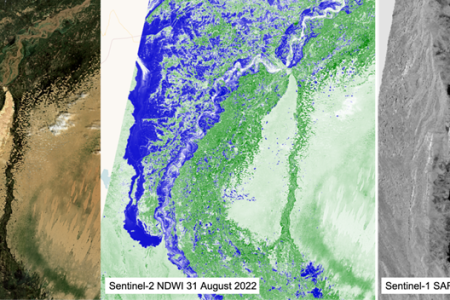
In this article, we explore the importance of earth observation (EO) data for identifying flood extents and how a new method for validating flood maps enables a quantitative, location specific measure of flood map accuracy

A team project with the Fluid Dynamics CDT explores how flood management processes can be captured on a scale model